Geopolitical Volatility and the AI Reckoning
The 10-day countdown to a global force majeure crisis, the yuan's assault on the petrodollar, unprecedented market corruption, and why OpenAI just pulled the plug on Sora.
DONT HAVE TIME? WE GOT YOU COVERED...
THE REAL UNDERLYING ISSUE…
Geopolitical Volatility and the AI Reckoning
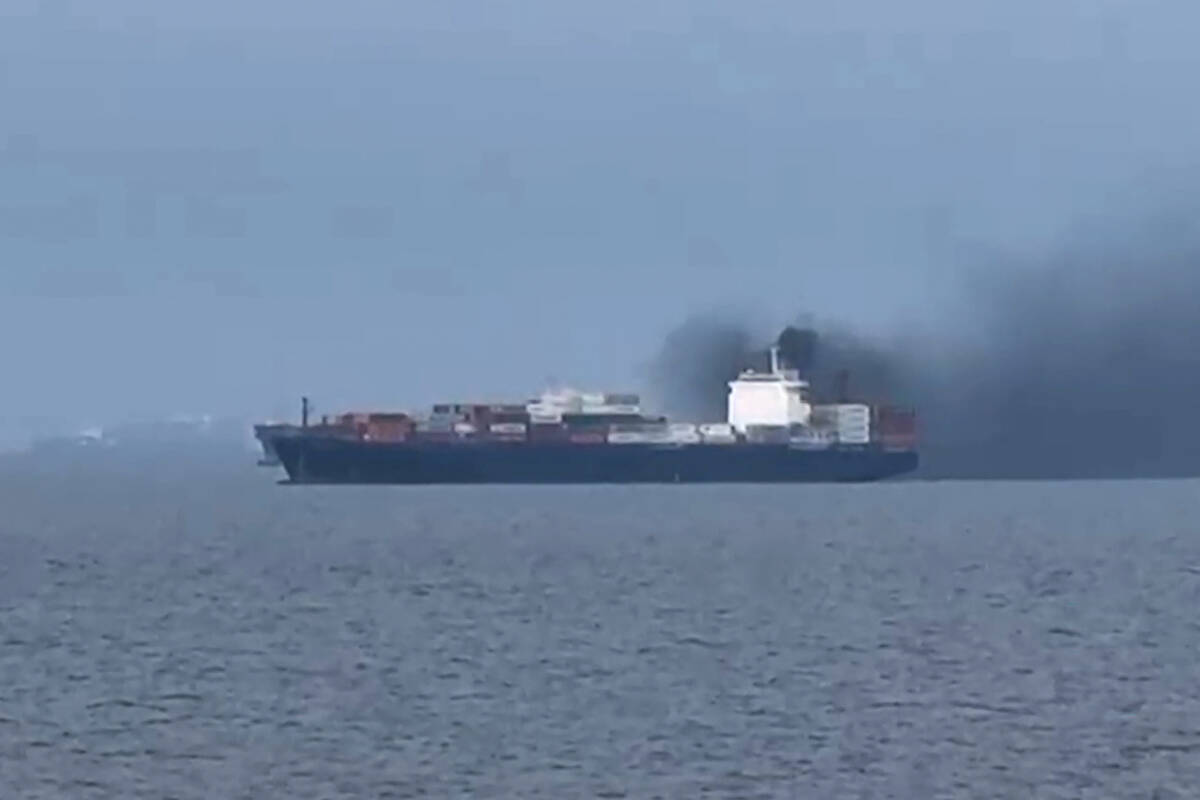
The Iran War: A "Suez Moment" and the Looming Shadow of 2020 The conflict in Iran, while framed by the administration as a "military action," has transitioned into a generational quagmire with staggering implications for American hegemony. The strategic situation took a dramatic turn following President Trump’s 48-hour ultimatum, which threatened to "obliterate" Iran’s power grid—starting with its largest electricity plants—if the Strait of Hormuz was not fully reopened. However, this threat was met with a sophisticated counter-escalation. Iranian leadership, now highly distributed and difficult to negotiate with after significant attrition in their ranks, responded by threatening to destroy the desalination and power plants of neighboring Gulf states. Under immense pressure from these regional partners, the President was forced into a visible retreat. In a move widely described as "empty," the President claimed "productive conversations" were underway and delayed the strikes. Iran immediately denied any such negotiations took place, leaving the U.S. looking like a "paper tiger" on the world stage. The "Tehran Toll Booth" and the Yuan Shift The most critical development is the transformation of the Strait of Hormuz. Iran has effectively turned this 20-mile-wide choke point into a permanent, financially enriching toll booth. Non-U.S. vessels are reportedly being charged a "passage fee" of approximately $1 per barrel. In a direct assault on the petrodollar system that has underpinned global finance for 60 years, these ransoms must be paid in Chinese Yuan. This creates a circular economy that bolsters China’s fiscal dominance. If the regime is not taken out, we move from a "fully open" status quo to a permanent Iranian-controlled gateway that actively de-dollars global trade. The "COVID Echo" and the 10-Day Window There is a chilling sense of déjà vu surrounding these headlines. Much like the early days of COVID-19 in 2020—where news of a virus in China or travel restrictions was initially downplayed by the public and mispriced by the markets—we are seeing a slow-motion catastrophe. The market is currently pricing this as a one-to-two-week "blip," but the reality is far more dire. We are currently within a critical 9 to 10-day window before a "Force Majeure Wave" hits. If the Strait does not open unconditionally, every oil company, refinery, and fertilizer producer will begin declaring force majeure (acts of God), triggering a contractual wave of defaults that will ripple through the global economy. This is not a "business as usual" scenario; it is a systemic "iceberg" that the U.S. is hitting in real-time.
Escalation: Bloodshed, Boots on the Ground, and Political Fallout
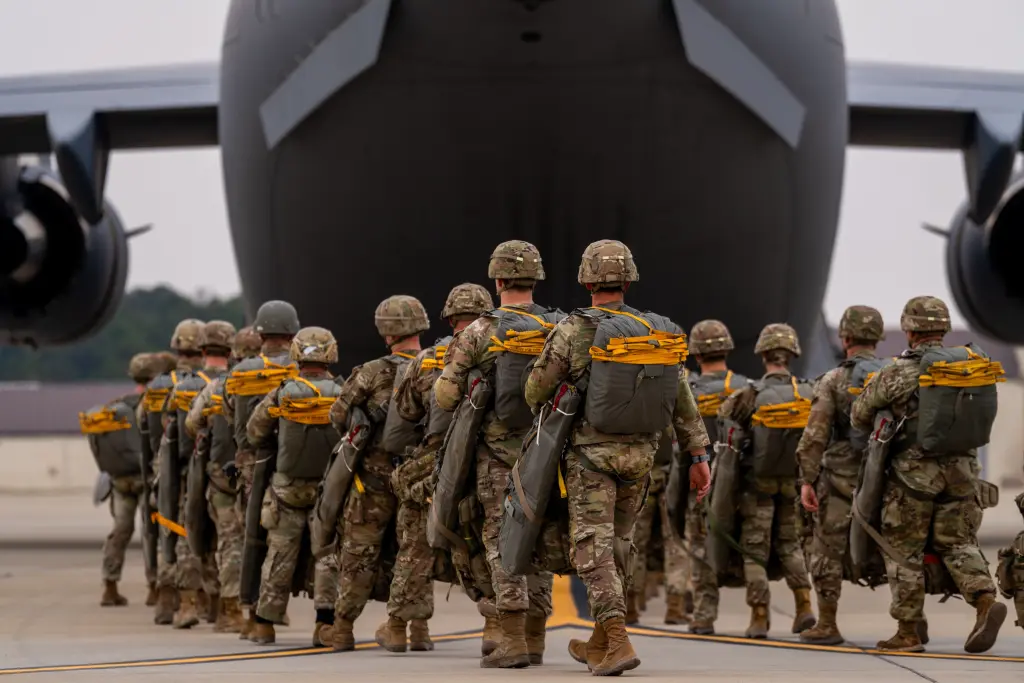
Because the administration cannot simply "walk away and declare victory" without leaving the Strait in the hands of a Yuan-collecting Iran, they are moving toward the only remaining option: escalation. The human cost of this strategic failure is no longer theoretical. American soldiers have already been killed and injured, and just today, a U.S. military base suffered direct missile strikes. Despite these immediate casualties, the administration is accelerating its posture. Confirmed reports indicate that 1,000 paratroopers are currently being prepared for deployment, alongside 14,000 additional regular troops. The objective appears to have shifted to "regime change or bust," threatening to drag the United States into an endless, bloody war within a nation of 90 million people. The short-term and medium-term global impacts are astronomical and remain entirely underpriced by global markets. Ultimately, this cascading failure represents more than just a geopolitical crisis; it marks the complete destruction of Donald Trump as a viable political force.
The AI Reckoning: OpenAI Shuts Down Sora

In a move that signals the potential bursting of the AI bubble, OpenAI has abruptly shuttered Sora, its AI video generator. Despite the hype, Sora was an extraordinarily unprofitable enterprise. Generating AI video at scale, only for users to rip it and post it on platforms for free, provided no path to monetization. The Pivot: OpenAI is now desperately cutting consumer experiments to focus on business clients, attempting to compete with Anthropic (which is already throttling its own users due to the massive costs of running GPUs). Global Contrast: While U.S. firms face a financial reckoning, AI adoption in China is aggressive. From state media to transit advertisements, AI is everywhere. The technology is transformative and here to stay, but OpenAI specifically is looking like a financial nightmare.
Ukraine's Unmatched Combat Library Is Open for Business
Amidst the chaos, Ukraine has found a sophisticated new lifeline. While the Iran war has been a windfall for Vladimir Putin—providing a surge in oil revenue to fund his war machine—Kyiv has successfully monetized its own combat expertise. The "Drone Trade": Ukraine is now selling its world-class anti-drone technology and training to desperate Gulf states who are being struck by Iran. The Irony: Ukraine is proving to be a more reliable security partner for the Gulf than the United States. Their ability to strike Russian refineries and export defense knowledge is a testament to their resilience, even as U.S. support remains inconsistent.
Other news
Crime is Legal: • While the geopolitical situation deteriorates, the financial markets are witnessing an unprecedented level of corruption. In the 20-minute window immediately preceding the President’s social media post regarding his retreat from the 48-hour ultimatum, massive, billion-dollar bets were made on the S&P 500 and oil markets. It is blatantly obvious that someone in the inner circle is utilizing non-public knowledge to extract absurd sums of money from the public. This goes far beyond "million-dollar" trades; it is a systemic betrayal that undermines confidence in every American institution. Nasdaq Plunges into Correction Territory: • The broader market is finally buckling under the weight of the geopolitical crisis. The tech-heavy Nasdaq dropped 2.3% on Thursday, officially pushing it into correction territory (10% below its recent peak). The S&P 500 and Dow followed suit, capping off a fifth consecutive week of losses. Defensive Options Flow: • Market sentiment has shifted violently from "buy the dip" to capital preservation. Recent options flow data shows a complete lack of aggressive call buying, with massive institutional demand for puts as protection becomes increasingly expensive. Investors are fleeing high-beta tech and seeking shelter in cyclical sectors and defensive positioning. Inflation Expectations Surge: • The OECD has revised its global inflation estimates, warning that the "cost-push shocks" from over $100/barrel oil and new tariff policies will keep inflation persistent. The New York Fed's latest modeling echoes this, projecting higher-than-expected inflation through 2026, which is already causing the Treasury yield curve to flatten as the bond market prices in a hawkish reality. Domestic Unrest and the "No Kings" Protests: • Domestic stability is also being tested. Over the weekend, an estimated 8 million people participated in "No Kings" protests across 3,300 events worldwide. The massive demonstrations were driven by a convergence of frustrations, primarily pushing back against the administration's escalation of the Iran war, rising gas prices, and aggressive federal immigration enforcement. Banking Deregulation on the Horizon: • In a stark contrast to the tightening macroeconomic picture, reports indicate the U.S. is planning to significantly slash bank regulations that were originally implemented to prevent a 2008-style crash. While pitched as a way to free up capital, it introduces a wild card of systemic risk just as the global economy faces a potential force majeure liquidity crisis.