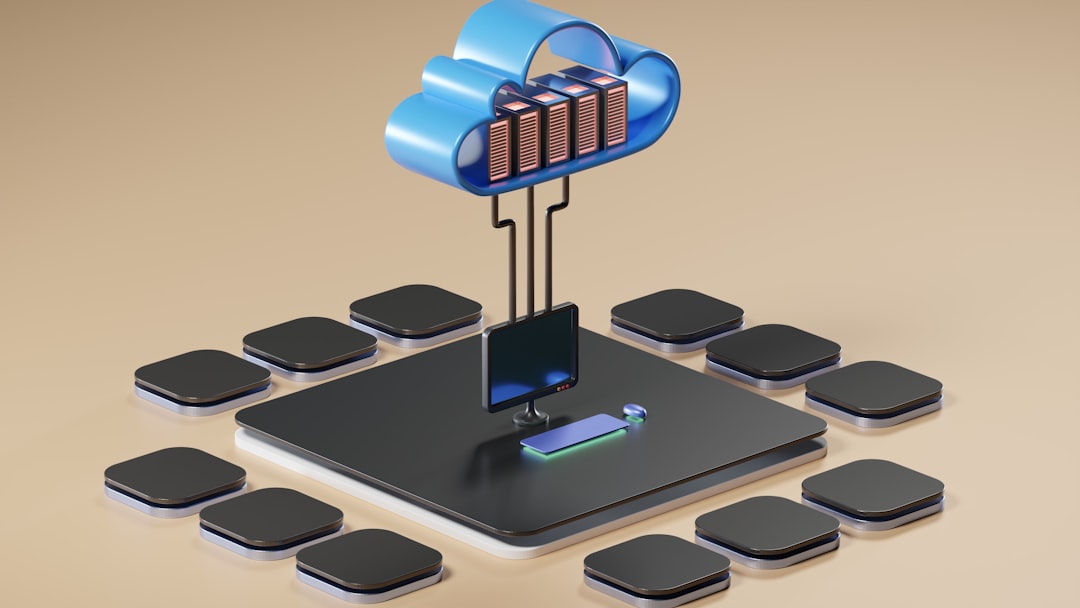
The AI hardware trade has been a spectacle. Storage names rested, then broke to new highs. Optical-networking names cooled off, then ran again. Whole baskets of chip stocks doubled in a matter of months; a handful did several times that. Which raises the question everyone is quietly asking: is the hardware wave topping out, and if it is, what carries the baton next? Start with why any of these stocks move at all. When a search giant put AI agents at the center of its developer conference, inference demand on CPUs jumped — and a dominant CPU-architecture licensor nearly doubled in about ten trading days. When the head of the leading AI-chip maker name-checked a custom-silicon specialist from a conference stage, that stock jumped more than 30% the next morning. One sentence, one repricing. Three Floors, and the One in the Middle Picture the AI supply chain as a three-story building. The ground floor is hardware — the GPUs, CPUs, memory, servers, networking, cooling, and power. Call it the cement, steel, and air-conditioning of the AI factory; without it nothing gets built, and it is the floor everyone already talks about. The top floor is applications — AI actually running sales follow-ups, answering support tickets, writing code, approving invoices. That floor holds the most imagination and the most unknowns. This is about the floor in between: enterprise data and security infrastructure. It is the least glamorous of the three, which is exactly the point. Market attention still sits on chips and raw compute. Data management, governance, and security draw a fraction of that attention, and their valuations may not fully reflect what they are worth. That gap — between what a thing does and what the crowd has bothered to notice — is usually where the interesting work hides. Here is the logic in one image. Hand someone the most powerful AI computer on earth, packed with the newest chips, then feed it data that is scattered, mismatched, stale, duplicated, and half-contradictory. That is a supercar stuck in a tunnel. The chip only computes; without clean, reachable data it has no idea what to compute. A GPU with no good data behind it is expensive scrap. The Factory's Four Jobs So before AI earns a company a single dollar, four unglamorous things have to be true. The data has to live somewhere. It has to survive an accident. It has to be findable and usable. And access to it has to be controlled. Those four jobs map to four sub-sectors, and the factory metaphor keeps them straight. The first is storage — the warehouse. Not the old business of selling drives, but a data foundation big enough (enterprise data now runs from hundreds of terabytes into petabytes), fast enough (every second a GPU waits on slow data burns compute worth real money), able to span a company's own machine rooms and several clouds at once, and reliable enough that one failure doesn't stall an entire AI workflow. The incumbents here don't really sell hardware; they sell the warehouse behind the factory. Bigger, faster, steadier — the whole plant runs better for it. The second is protection, backup, and recovery — the vault and the disaster-recovery center. This sounds like routine IT until an AI agent is running orders, inventory, and finance straight off the underlying data. Lose that data to ransomware, human error, or a cloud mishap and the agent stalls; poison it and the agent confidently acts on wrong information. Not paranoia — a real thing that has already happened. In 2024 a major public cloud accidentally deleted the entire account of a large Australian pension fund, one managing more than $83 billion for over 615,000 members. What saved it was not the cloud provider but an independent backup kept on a separate platform. And backup alone isn't enough: if restoring takes days, every minute of downtime is lost revenue and lost trust. These vendors sell survival, not software. The third is the governed data platform — the logistics and dispatch center. Data existing and data being usable are two different things. A library with millions of books and no catalog is useless to a researcher, and AI has the same problem. This layer pulls a company's scattered data together, builds the catalog and the rules, tracks where each record came from and which version is current, and decides who and what may touch it — turning a messy pile into something AI can actually search and reason over. As one database-industry founder keeps arguing, the valuable asset isn't public web data; it's the private data a company has spent years piling up. This layer is what turns that private hoard into fuel. The fourth is security, identity, and access — the guardhouse, badges, and cameras. Once companies let AI agents read data and act on their own, the question of who may touch what turns urgent. An agent is an employee with the volume cranked up: tireless, able to scan thousands of documents and fire off hundreds of emails in minutes. Handy right up until one is misconfigured, misused, or hijacked — at which point its blast radius dwarfs any single human insider. No large enterprise hands real workflows to agents without building this fence first. And unlike most software, security spending is hard to defer; a firewall is rarely optional. Why This Reads as a Trade, Not a Lecture Four threads pull it together. First, once the hardware is in the ground, data and security are the likeliest next chokepoint — and in markets, capital and re-rating tend to flow toward wherever the bottleneck sits. Second, the durable edge in enterprise AI comes less from public data than from a company's own private records, so the platforms that organize, protect, and unlock that data land where future profit may concentrate. Third, many of these names are high-quality subscription businesses with sticky customers and steady cash flow — the model that compounds when the direction is right. Fourth, security budgets are harder to cut than most software; firewalls and zero-trust tend to survive the quarters when customer-relationship and collaboration tools get delayed, which is why several security names held firm while the broader software group sagged. The Bridge Everyone Steps Over None of this is the loud part of the AI story. The floors above and below get the headlines. But the top floor only works standing on the middle one — the applications need the data plumbing beneath them before they can do a thing. That makes this quiet layer the bridge between the chips and the software, and a bridge is worth watching precisely when every eye is fixed on the two towers on either side of it. The wider point outlives any single stock. The further AI runs, the more the edge goes to whoever can read the market's story straight: see which floor is already crowded, and which one the next chapter has no choice but to be built on.
Newsletter
The Next Frontier in the AI Cycle: Mapping the Overlooked "Layer 2" Infrastructure Play